Peptide Pureness & Quantitation Screening
Recognizing Peptide Pureness Testing
It is an area-percent pureness dimension, not a total identity or activity examination. Importantly, pureness percentages define chemical structure only-- they do not indicate sterility or biological suitability. Peptides from Maxed Out Compounds are supplied exclusively for research laboratory study use and are not meant for human or veterinary objectives. Peptide pureness is usually revealed as a portion, such as 95% or 98%. This number stands for just how much of the example is Find out more made up of the wanted peptide sequence. For many laboratory applications, a pureness of 95% or greater is taken into consideration research-grade.A single generic chromatographic approach is commonly not nearly enough for peptides that are hydrophobic, extremely fundamental, closely associated in sequence, or partially purified. We supply HPLC and UPLC pureness evaluation process that focus on helpful splitting up rather than only producing a percent. We develop analytical operations around the example kind, sequence attributes, modification profile, and decision context. Jobs might entail unrefined intermediates, detoxified peptides, kept lots, client-supplied products, or products generated with our personalized peptide synthesis system.
Structure & Material
At Maxed Out Compounds, every product we provide includes a clear testing record and clear documentation. Our mission is to sustain scientists with high-purity, validated substances that satisfy the needs of modern clinical research-- nothing more, nothing less. Independent, third-party screening plays an important duty in guaranteeing neutrality and precision. By utilizing exterior labs for confirmation, distributors eliminate predisposition and support clinical trustworthiness. It's an additional step that provides scientists self-confidence that each peptide fulfills constant, proven requirements. This quality matches the majority of artificial insemination study applications-- receptor binding assays, enzyme activity research studies, and cell society experiments.
Stability Analysis
In addition to HPLC and MS, specialized laboratories may use orthogonal strategies for added precision. As an example, capillary electrophoresis can be used to separate really hydrophilic peptides or to double-check outcomes, and MALDI-TOF mass spectrometry can aid in mapping larger or changed peptides. Several peptide producers or suppliers will certainly supply a COA (Certification of Analysis), for example our bpc 157 tb 500 blend, that consists of the pureness portion by HPLC and identity confirmation by MS for each and every batch. Top-tier laboratories typically report peptide pureness well above 95%, often ≥ 98-99%, by using state-of-the-art HPLC and MS analyses. They likewise evaluate both basic materials and finished peptide vials, which helps catch any kind of pollutants, destruction products, or formulation variances.FDA and the European EMA have actually developed guidelines mandating comprehensive analysis and quality control for peptide items to ensure security and effectivenessr. In the context of pharmaceutical or clinical-grade peptides, lab validation is indispensable to satisfying these guidelines. As an example, before a peptide medicine can get in human trials, its manufacturer should demonstrate the identification, purity, potency, and safety of the peptide via confirmed logical methods. Peptide pureness testing information are compulsory in preclinical studies and have to be included in investigational brand-new medication (IND) applications and later brand-new medicine applications (NDAs).
Peptide Testing: Hplc & Mass Spectrometry Purity Confirmation
- It guarantees you that the peptide will certainly perform well in experiments (assuming pureness and identification are as specified), yet it also brings the caveat "Research study Usage Only." This phrase is normally published on the vial or documentation.
- It's possible to have a peptide that is, claim, 95% pure by HPLC and yet the web peptide web content is something like 70% of the powder's weight (the remainder being water and salts).
- This approach divides peptides from contaminations and evaluates both target peptides and contaminants, ensuring high-grade samples for study.
- Gauging peptide purity is usually done with analytical high-performance liquid chromatography (HPLC), commonly paired with mass spectrometry (MS) for identification verification.
- Hydrophobic peptides, highly fundamental sequences, changed constructs, and carefully relevant analogs can be examined with technique modifications matched to their logical dangers.

We can give specialist peptide pureness decision solutions utilizing analytical reversed-phase HPLC combined with mass spectrometry. Each peptide is rigorously kept an eye on throughout the analytical cycle according to stringent logical quality assurance and biosynthetic quality control standards. HPLC is outstanding at addressing the inquiry "exactly how pure is this example by chromatographic location percent? " It does not, by itself, verify that the primary optimal is the designated peptide.
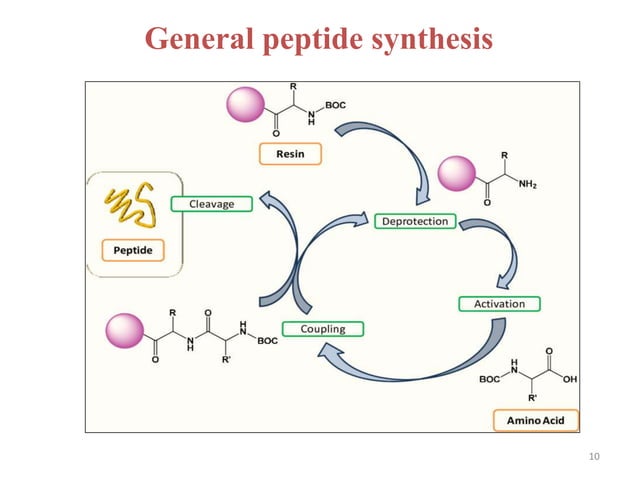
The gold standard for measuring peptide pureness is high-performance liquid chromatography, generally abbreviated as HPLC. If you see a pureness percent on a peptide item, it likely came from an HPLC analysis. This matters since peptides are constructed one amino acid at a time via solid-phase peptide synthesis (SPPS). At each step, there's a small possibility that something goes wrong-- an amino acid does not connect, the wrong alteration happens, or a side response produces an unintended by-product. Over a chain of 10, 20, or 40 amino acids, those tiny per-step error rates compound.
While peptide purity isn't the only aspect, making use of inadequately identified reagents is an identified factor to irreproducible results. For a 10-residue peptide with 99.5% coupling effectiveness, you 'd anticipate regarding 95% of the final product to be the unabridged sequence before filtration. For a 30-residue peptide at the same efficiency, that drops to about 86%. This is why longer peptides are more difficult to create at high purity and usually set you back even more. Pureness is the percentage of books in the delivery that have every page published appropriately, in the right order, without any missing chapters and no additional web pages stuffed in. A 95% pureness indicates that out of every 100 "publications" in your batch, 95 are perfect duplicates and 5 have some kind of mistake. The injector presents a specific volume of example right into the mobile-phase stream. Constant shot volume issues because straining the column can expand heights, distort purity quotes, or conceal neighboring pollutants. A solid peptide testing workflow utilizes approaches that respond to complementary questions. Learn more here The table listed below is the useful way to think of usual examinations when checking out a peptide COA.